So... How Is Sustainable Fashion Going, Really?
feat. Nadine Schratzberger

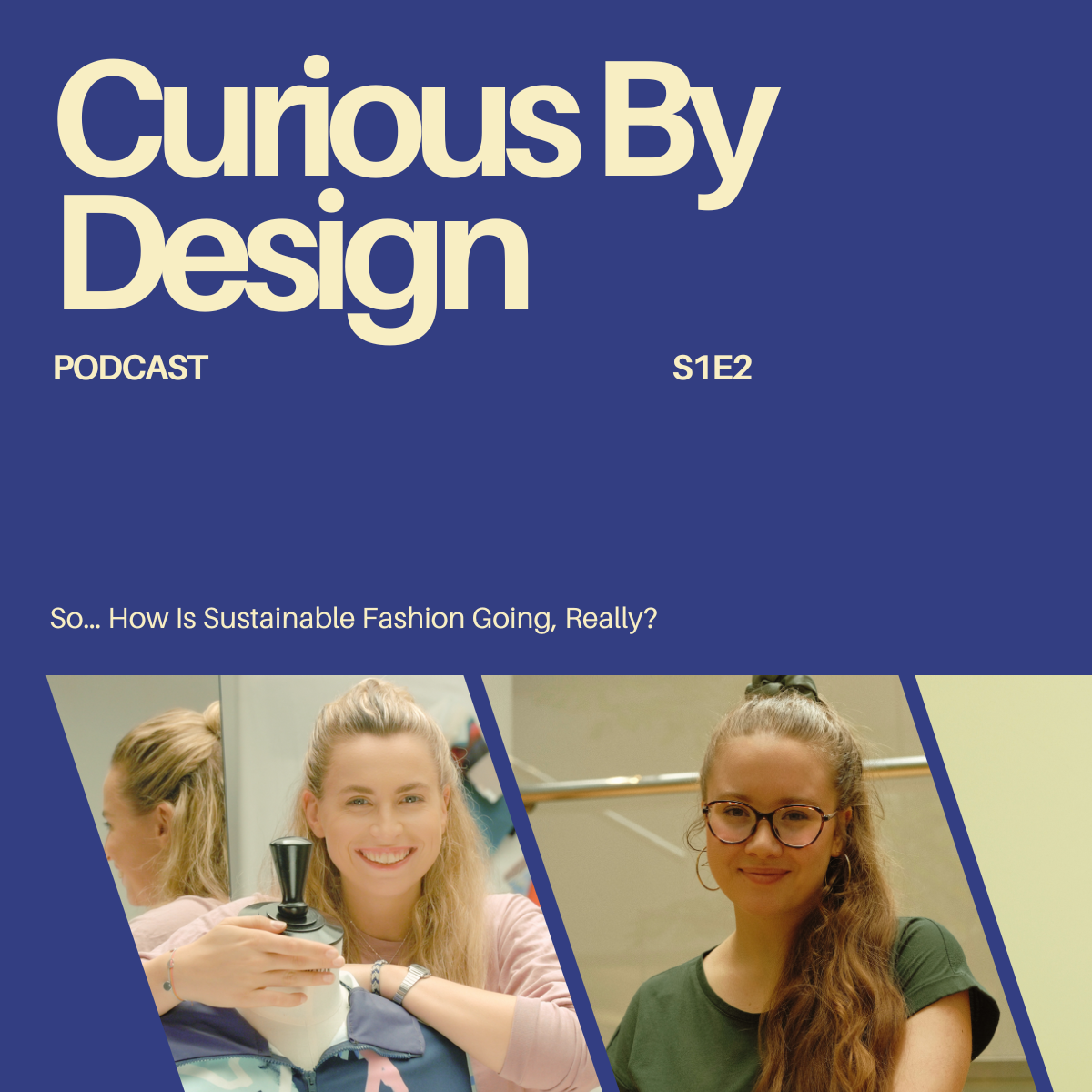
Hi, I'm Tori, and this is Curious by Design, a podcast about the hidden systems behind everyday things, and the quiet choices that shape our lives more than we think.
In this season, we're talking about fashion. Not only trends, but materials, labor, power and responsibility. About what we wear, why we wear it and what it costs beyond the price tag. Today's episode is a conversation about sustainable fashion, the fast fashion dilemma, the future, the pressure brands face, what happens when you decide to build a brand and also to let it go.
Hi, my name is Nadine. I'm a circular economy expert in the fashion industry. I offer different services like speaker, moderator, consultant, mentor, so a multi-solution expert like the circular economy.
And I also started 10 years ago my circular sportswear brand MONTREET based in Vienna, Austria. And with coming out of this podcast, I have to tell you I'm closing MONTREET. So it was a really amazing journey and a lot of growth throughout the last 10 years. And now it's over and it's the start of something new.
When I heard about Nadine closing her brand after ten years, I honestly needed a second. Because we're so used to hearing growth, scaling, expansion, that we forget how much courage it takes to say: this chapter is complete. We'll come back to that later. But first, I wanted to tap into Nadine's knowledge. All the practical, sometimes uncomfortable, but very real things she's learned about circular fashion over the years.
After my last episode about wool, something annoying happened. I started checking labels even more than I already did before. Everywhere. In shops, in my own closet, even other people’s stuff, a bit embarrassing... However, I realized: I kind of know which materials feel "good" or "bad"... but I don't always know why. Like, I know I prefer cotton, wool or linen. I know polyester makes me regret my life choices. But if you asked me to explain the difference properly? That's where it gets fuzzy.
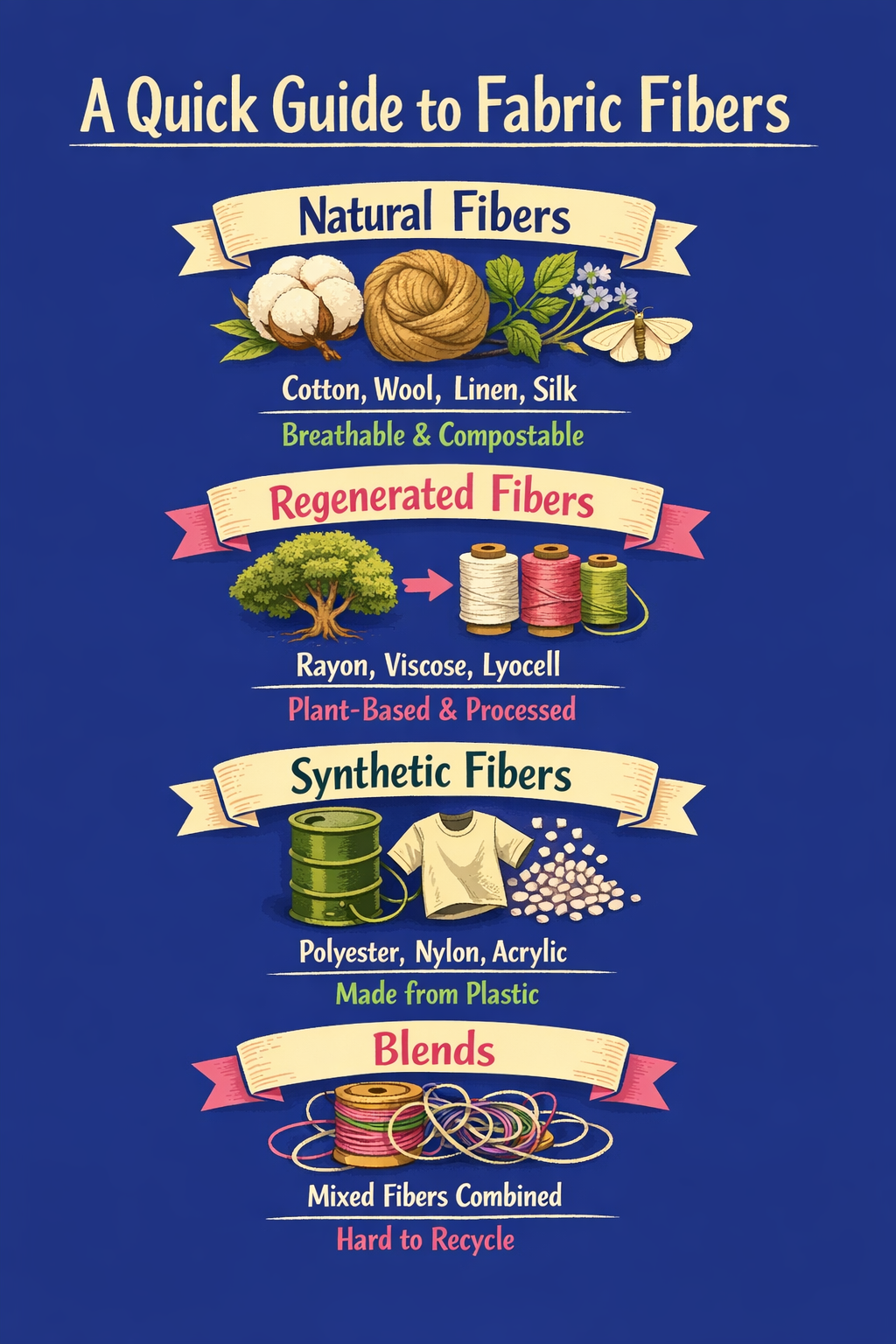
So let's pause for a second and do a very short, very human fabric overview, no fashion school required. There are four big groups you'll usually see on labels.
-
First: natural fibers. These come straight from plants or animals, such as cotton, wool, linen, silk. They breathe, age naturally, and usually feel good on the skin. They're not automatically perfect (cotton can be water-intensive, wool can be itchy) but they behave like... nature. Predictable. Repairable. Compostable in the best case.
-
Second: regenerated fibers. This is where it gets confusing, because they sound synthetic but they're kind of nature's remix. Rayon, viscose, modal, lyocell - they all start as plants, usually wood pulp, but are chemically processed to become fiber again. So they're not fully natural anymore, but also not pure plastic. Some are better than others - lyocell, for example, is usually produced in a much cleaner, closed-loop process.
-
Third: synthetic fibers. Polyester, acrylic, nylon. These are basically plastic. Made from oil. They're durable, cheap, stretchy, and very obedient in factories, but they don't breathe well, shed microplastics and stick around on this planet longer than we will.
-
And then there are blends. A blend simply means: more than one fiber in one garment. Like cotton with elastane or modal with polyester. Sometimes blends make sense, a tiny bit of stretch can improve fit and comfort. But the more fibers you mix, the harder it is to recycle, repair or even understand what you're wearing. At some point, it's not innovation, it's a smoothie no one really asked for.
This was my starting point. Not perfection, just awareness. So instead of pretending I suddenly know everything, I asked Nadine the obvious next question: given how complex this already is... where does it actually make sense to start when choosing materials?
Concerning the material, it's sometimes super important to see how many fibers are in one product. When you see there are three different fibers in one product, you're like, maybe I don't buy it.
So when it's more in the direction of a hundred percent and one fiber added, for example, like in t-shirts, it's mostly cotton and then some present elastics. I wouldn't buy something when it's three different fibers. It's a little bit, what the fuck, it's a cocktail.
And also go on their webpage, see what they share. Also, do they have a sub page on production where you can really see where the factory is and maybe they also share a link to the factory or is there someone who you could write to and say, Hey, I'm willing to buy something from you, but I have some questions left. Are they willing to answer everything? This is a lot of work, but it's good work what you're doing.
What I also would suggest is, do you really need this? And does it fit my wardrobe? You don't buy the whole outfit normally. You only buy the shirt or the trouser. And then you go home and you're like, okay, how does that match the other products I already got? So this is always the question I'm questioning myself because my mom always asked me that.
She always asked me, does that fit your other stuff you already got? And sometimes I had to say no. And then I was like, but I want it. And she was like, no, I'm sorry, we don't buy it. So this is what I got from my parents. They didn't know back then that this is called conscious consumer behavior. We now have a word for that.
And also, for example, if you really want this really cool new sneaker, don't buy it new. Search for it on Winted or Willhaben or Vestiaire, all these other platforms who sell them, for example, secondhand. Maybe you really find it. It's more work, but it could be also satisfaction when you find it. And then you have a story behind the product. I always love stories. So behind every product I'm wearing, there is a story. Despite my socks maybe.
I was looking for a dress a few days ago because my sister has a matura ball, so I needed to find something. And the only things I could find are mixed materials. And I never buy stuff like that. I always look for cotton and wool stuff and linen stuff, but never mix of polyester and elastan and modal and like all of it. So it was really hard to find something that is good material and my fit, how I was imagining it. So that's super difficult. Do you have some tools you use to find it or is it just solely how you said research, put time in it and then see? There is no shortcut that you know of.
I had basically the same issue with a friend. She was searching for an outfit for a wedding this weekend. And I was like, okay, it will be cold wedding and what do you want to wear? And she sent me some pictures of what she had in her wardrobe. And I was super proud of her because she combined everything. And I was like, these outfits look super summerish. You won't survive because it will be super cold.
So we were thinking about the wardrobes of our friends. And if I have something, she in the end borrowed a dress from me and another friend. This is, for example, a tool because for these special occasions, you normally just need once a product or a dress or a really nice suit. Why don't just borrow it? I remember that when we were small, we went every year to the ball of our school. And I remember that sometimes I borrowed like an old dress from my mom's friend. They still got, you know, the trends are coming back. So you won't be out of trend. You just will look super beautiful. So that would be when this is a tool, then I would say borrow it.
I think we sometimes forget that the clothes are not just in the shop, but also maybe at your mom or your friend or somewhere that you can just have for a day. Or my other idea was to buy something that is just classical and you can wear all the time, like the small black dress from Coco Chanel that you can wear all the time. So something like that. It is reusable.
Work on a wardrobe which has key pieces in specific colors, but also some people can't wear black because then they look really pale.
I thought I could never look good in black because I would be pale. But a few times I got compliments for it. And maybe sometimes if you have like a good makeup, clothes can be better if you add accessories or makeup or something to it to make it a look and it gives the whole outfit more complexity. So creativity is important.
I love that you said so many things that resonate with me. I also had the story with the parents asking, do you really need it? Can you combine it with what you have? Can you make an outfit? I had the same one and that's how also shaped what I do now. So I see you and also a guest I had in my last episode, that were also the same ideas about fashion and clothes and about what to buy and how to consume. So I think that's a general maybe feeling or attitude towards it. So I hope that more and more people will think this way and also maybe change something in the world. I love to open my closet and really enjoy wearing what I have and knowing, okay, this is really my piece and I love wearing it and it fits me. It's a great feeling and gives the confidence and shows you to the world. So it's like, yeah, there's no other way to do it.
This is also exactly why I'm building my app. Because knowing what to do is one thing, but actually doing it when you're tired, busy, and just want something that works... that's the hard part. But even with the best intentions, we're still operating inside a system that keeps accelerating.
Which brings us to the elephant in the fitting room: fast fashion and its even more chaotic cousin, ultra fast fashion.
Fast fashion are basically all the brands you can think of to say that. But ultra fast fashion means that they're basically developing collections every day, every 24 hours. And if you watch the news, one of these ultra fast fashion brands opened the store in Paris in November. So you all know who I'm talking about and there were a lot of demonstrations about it. This was a huge step and it was devastating for the people that it opened in Paris. Ultra fast fashion means that it's basically one step crazier and faster than fast fashion. On the side, we have to look behind the scenes of a brand, like how the products are produced and where they are produced.
And if the people who are producing these garments, if they're treated well, if they get a really nice income called living wage. Ultra fast fashion, we can't be sure about that. And also there are a lot of researchers who research that so-called garment workers are not treated really well and their salary is not a lot. So they can not live from it or however live from it. It's not only about, oh, it's a really cheap t-shirt. It's all about, where is it from? How did it get here? And also when they pack it and ship it to Europe, which transports are they using? Which resources are they using? We all know CO2 is a big word, but there is a lot of CO2 releasing in just transporting it.
But we have to look on the whole supply chain until a product comes in our wardrobe. I wouldn't consume fast fashion or ultra fast fashion, but I also consume not a lot. I'm not a shopping person. I love new clothes and yes, I also studied fashion, but I really try when I go shopping to really think about, do I need it? Is the color, does the color fit me? Where is it from? Who produced it? Is this a brand to work on social benefits for their workers? Or are they also thinking about the planet? How is this garment dyed? How much water consumption is there? There is a lot of research before I buy something. And I know this is super annoying and not really convenient, but I think you have to put in some effort to make a change. What I really like is second hand, for example, because in second hand, you sometimes see a fast fashion product, but the old fast fashion products, when I was small, there was a lot of quality. They lasted forever. I still have a pant from a fast fashion brand. I have that since I'm 18, you know, I didn't grow out of it.
So it doesn't mean that it hasn't quality, but everything which is produced now, I think they also produce it to not lasting really long, that you also have to buy something new. If you know that from tech products, sometimes tech products disturb themselves that you're like, what the fuck? I just bought it like two years ago and I have to buy something new. Sometimes these brands are doing it on purpose, but I don't call out names.
So I would tell the people who are now listening to us, just think it through before you buy something. I know there's this quote, shopping makes you happy and all these things, but there are other things what makes you happy. And I also like eye shopping, you know, and sometimes I really like thinking through, do I really need it? Is it helpful, for example, my bank account, if I now buy something? So there are a lot of questions in my head before, for example, a leather jacket. People are saying, oh, I need another jacket. It's so trendy. Is it then worth to also buy a leather jacket? Like, do you really need it? Or isn't this not your style at all? And you only want it because everyone has a leather jacket now.
What really stayed with me here is how normalized all of this has become. New collections every week. Every day. Sometimes faster than my laundry cycle. And once you start questioning that speed, you end up at a place most of us never see, the rules of the game. The laws, the pressure points and who actually has to take responsibility.
Before we move on, quick note. We touch on a lot of laws and regulations next and I know this can feel dense or confusing. If you want me to do a deeper, more practical breakdown of this in a future episode (what actually affects you as a consumer, founder, or creative) leave a comment or send me a message. I’ll happily turn the bureaucracy into something a bit more digestible. And now back to Nadine.
I founded my brand on these values on what's my supply chain behind and what's in the garment and which fibers do we use and material we use. So this was really easy because we are a brand was founded in 2018. So we are not really old, but it's hard. And now everyone knows there are a lot of regulations. And also mid November, they started again to negotiate the due diligence law for big brands. It's still super hard.
It's like you have a fruit salad and you need to know all the ingredients and where they're from. And I always say that the food industry is way more ahead than we are because they started in the 90s and now it's not a trend to buy biological vegetables and fruits. Everyone buys it like that.
For us, it's not like that still. So I think it's super important to have these regulations that brands know what they need to know about their garments. They eventually know it. You know, when you're going to fashion school, you learn a lot of materials and you learn a lot about fibers and what's in it and how you put them together in a product and all these ways. But still when you're a really big brand, you have so many suppliers and then there are tires like tire one, tire two, tire three. So there's not only the supplier you talk to, but the supplier gets also like their supplies from someone else. So it's super complicated, but still it's super important that there are these regulations and there's this European Act for Circular Economy, which should be the status quo in 2050. So we need to see how this works out. But I think it's really good that there is a regulation about when you produce good products, what means good products.
When you produce products who are like able to repair again, able to recycle or with quality. It's called the eco modality. You don't have to pay a lot for the product or not this much taxes. But if you produce a product which is not recyclable or not repairable, you have to pay for it, you know. So this is super complicated in this all regulations, but to sum it up, I would say it's important that we have laws on that, how we produce and where we produce. But as a brand, and this is what I really get, you have to dig deep and you have to know everything.
And this is why it's super important to have employees who work on that. Because when you're a brand who was founded 100 years ago, you have so many contracts with different suppliers. You have to bring it up and see what's there and who are you still working with. But I think still it's possible and there are a few decides on. And still being an activist and advocate, you can consume what you want to. And if you're willing, you only consume from a brand or second hand, something which is not harming that much.
Up until now, we talked a lot about personal choices and brand ethics. But there's another force quietly shaping the industry: regulations. The kind of stuff that sounds boring... until you realize it decides what's allowed, what's profitable, and what stays broken. So I asked Nadine to help untangle what's actually happening there, without turning this into a law lecture, promise.
The Activists, why we are all not super satisfied how these acts develop is that, for example, for the Due Diligence, there are all these omnibus acts. So it only will target really big brands and small brands. They still do everything for it.
A lot of brands fear sometimes these acts and laws and don't know if they can still sell their products in another country. It's the European Union. They develop a law, but then you as a nationality or country can develop the law in their favor, but also targeted on the nationality. So some brands don't know, OK, I can still sell in Austria, but I don't know if I can still sell in Germany. When you're a small brand, I would say, relax a little bit. If you're still into recycling sustainability and you know everything about your products and how you pay your workers and stuff like that, you're in a safe space.
Just concerning, there is a packaging law. You have an online page from Green Button where you have to register and say how much packaging you are using. It's part of this waste management law. And this you have to do also as a small brand, but still for all the other regulations, everyone is doing well, despite of maybe fast fashion. And let's see what's next. It's super important to have all these laws. And I know it's super complicated and sometimes a little bit, what the fuck are they doing? Sorry to use this word. But I think it's also good to regulate it on a European level.
I have a lot of questions. No, but I just wanted to ask about the regulations you mentioned. A year ago or half a year ago, I was talking with a lawyer and I was talking about fashion and he said, oh yeah, fashion industry, there is not much happening there right now, because the industry is already under pressure and the government doesn't want to put it even more under pressure.
That's why we don't have much progress into the sustainability direction. That was what he told me. But I'm curious to know more what is happening there. So if you have something.
Yeah, I understand what he said. It's at the moment what you say in German, it's a hot potato nobody wants to touch. And it's super hard and textiles and like all these supply chains, super complicated. And I always say in my seminars, supply chains are complex and circular supply chains are even more complex. I totally get that. And it's super complicated, but there is a lot happening. We have to prepare for that. I think when you're a really small brand, and you're also already unsustainable, and you're also keep track on all your fibers and how sustainable is my product or how circular it is. Can you bring it back in a circle? Can you repair it? Or can you recycle it or upcycle it? There are different solutions in the circular economy. But there are, for example, the Eco-Design Law Act. It's about how you design a product.
Then the EPR, Extended Producer Regulations. It's not only for the textile industry, there are more industries who need to see how they work on that. And it's also about this Eco-Modality, how you produce, is it eco or not.
Then there is Eco-Label, a European Eco-Label. And also Germany has the Blue Angel, Green Button. And we also have Austrian Eco-Design Label.
And we also have the law, and where Austria is also super good in, is the waste logistics and how we separate waste. The Waste Act. Basically, you don't have to know them all, but there are a lot of laws on that.
There is the Due Diligence Law.
Then there will be coming up Eco-Design, but also the Digital Product Passport. It's for you to really see your supply chain. I love to speak in pictures. For me, the DPP, the Digital Product Passport is like Facebook, you know, you have all your friends as suppliers and then you see them. So there are a lot of different of that. I just mentioned some. I have some LinkedIn posts on it.
All of this: the pressure, the complexity, the constant need to justify doing the right thing leads back to a very personal decision. Because Nadine didn't just study the system. She built a brand inside it. And after ten years, she chose to close it. Not because it failed, but because she changed.
At MONTREET, it was a lot about circular economy. When I started, I didn't know what circular economy means. But on that as a base, I started the brand. We used all the cutoffs to make accessories. So zero waste accessories, we called them for adventurous people. And then you also were able to rent our products, not only buy them. And every first repair of your purchase was for free. And I always told the people who bought our products that it's like a marriage. It's forever.
So when we're closing down and there are people who want to repair something, basically everyone knows our tailor in Vienna. So repairing is still on. And it's beautiful how people reacted when we said we will close down. But it's also nice to close down because it was a nice journey and it was amazing what we built and not closing down because of internal issues. It was just out of growth and development in different directions. Me as a person, I will stay in the fashion industry and will try to revolutionize it and drive change.
What I really love is that Nadine didn't step away from the industry, she stepped closer to the people in it. Instead of competing, optimizing, or burning out alone, she is helping create a space where fashion professionals can actually talk, think and breathe together. And that's how the Fashion Forward Retreat came to life, something I kept hearing about long before this conversation.
Last year in 2024, I met Caroline Schober and Anna Greil at the Changemaker for the Change Retreat. It's from CXC and we met in the middle of Sweden and we were the three Austrian women working in fashion, but never have seen each other in person. We had a couple of days in the woods of Sweden. It was super nice. We got to work a lot on us and also on our purpose, driving change and in the end, we came up with this idea. We should do a retreat for fashion professionals who are seeking change in our industry and want to make something different.
I think this is a quote everyone knows already. This industry is one of the biggest polluters in the world, not the biggest, but one of them. With all these brands doing fast fashion and ultra fast fashion, we were thinking we need to give all these other fashion professionals who are seeking allies to drive change a safe space. So we came up with this idea to do a retreat and this was in April and fast forward in November 2024, we had our first retreat in Austria with participants also from Norway, Spain, Germany, Hungary, Ukraine and also Austria. We wanted to see this cross-border development and collaboration.
It's called Fashion Forward Retreat and it's basically for everyone who is in the industry. Sometimes people say, oh, I have to be a designer. You don't have to be a designer, just work in this industry. And it was super nice. We worked on a hackathon former to see how we can collaborate across the industry. But also, you know, when you spend your mornings together, your lunchtime together and your evenings together, there are coming up more ideas and you can work on your own problems. For example, when you have an idea and you don't know how to make the next step, you can share it with the others.
So people really worked from the retreat chalet on their own projects. And we made a program where in the morning you were able to work remotely, but then also have a session on learning and developing, like learning more about the industry, for example, European Union regulations. And then in the afternoon after lunch, you worked again.
And then it was more about co-creating and how we can work together and see what will happen. There are a lot of different people, also men and women. So retreats are not only for women, for those who are listening. And it was super nice. Safe space for everyone. And there will be a next one for sure next year. So for anyone thinks it is interesting for them, we have a LinkedIn site and Instagram and its called Fashion Forward, so you will find us.
We want to create this community. It's all about collaboration. And sometimes you think you're alone in this, but everyone else is also alone in this. And we want to connect the points between the persons. We are like a triumvirate, like in the ancient Roman empire. So I'm the sales person and I'm the crazy idea person sometimes.
Last year I was in the U.S. and I had the possibility to bring someone from the U.S. to Austria. So I called the girls and said, Oh, we have the possibility. So I know we are doing these retreats, but maybe it would be super nice for a community to bring someone from the U.S. and see how there could be made some cooperation or how we can learn from each other.
This year, it feels like last year, but it was this year. We invited someone from Fashion Revolution USA to Austria. It was funded by the U.S. Embassy. So she came and we made 10 days of Fashion Forward Beyond. We called it like that. They were after work supper at a really nice store called Sabrina & Saborka. We did after work mingling. There came a lot of different people just to catch up and see who is here. And then we also had a panel discussion with the fellow from the U.S. working on what does collaborating mean in the U.S.? Also, what does collaborating mean in the EU and what can we learn from each other? It was at the Glory Store Vienna.
And then we also did a really nice project. It's inspired by Dress for Success. It's an NGO. It's all over the world and it helps people who don't have the money to really prepare for their first job interview. It's a safe space where you can go. You get a stylist on your hand who helps you to dress for your job interview, but you also get workshop how you talk to these people, how you negotiate money and salary. So we did this in the Caritas Shop at Scheffernplatz with young people. We invited around 20 students and then we had experts from all the industry, like marketing, law, architects, stylists and also color analysts. So the young people were able to talk to these people how they developed in their profession and how they got on this position where they still are.
So it was really nice to strengthen the community. I now see that there are a lot of people who want to work together. We also have a Slack channel, so you can just write us and say, hey, we want to be part of the community. How can we get in? And there are a lot of people who want to drive change, who are willing to meet and see what's out there, also to seek for co-allies to develop their idea. There are many projects in the line. We're a super young collaborative, but I'm happy that we use the momentum and that there are fellows out there who are willing to contribute and who are really seeking to drive change.
The textile industry is a super big topic and sometimes you have the feeling it's not only one thing you have to change, it's like a whole forest. So I would say if you're in this industry and if you want to drive change, good things are coming to good people and good things are coming to people who continue to work and don't give up.
That's such a great quote to finish.
Before we wrap up, I have one last question and it's my favorite one. Because good conversations don't end when the episode ends. So Nadine, if someone listening wants to keep thinking, questioning, maybe even re-imagining their role in all of this, which books would you recommend?
There are two books. This one book is from the Patagonia CEO, Let My People Go Surfing: The Education of a Reluctant by Yvon Chouinard. And then there is another book I recently stumbled over. It's Moral Ambition: Stop Wasting Your Talent and Start Making a Difference by Rutger Bregman. I think this is interesting also for people who are not in the industry or who are working for a big corporate, who are not really focusing on planet-driven decisions.
Sometimes you're working for this big corporate and you think, I'm super into sustainability and I want to drive change, but I'm working for someone who is not willing to do it. I think this book is really cool for that. I'm currently reading it and I think this is cool. I also have a lot of designer friends who work for really big brands. I also shared them with them because sometimes you're a well-driven person, but you're younger than me and in my generation, not everyone is this super high-value-driven person. We work for someone and then you go home and do your things. It's still part of the moral and when I talk to them, they're like, yeah, no, they're not doing good, but I also have to pay my rent. I think this book is super well for that.
If this episode made you pause… if you want more stories like this, more memory, more meaning, more curiosity, join us. This is Curious by Design, a podcast where we explore the stories hidden inside everyday things and the questions we’re still asking about them. Season one is all about fashion: how it shapes us, how it challenges us and how we can shape it back. You’ll find the link in the show notes. Let’s stay curious. Together.